
What Type of Double Eyelid Surgery is Right For You?

Fellow of Academy of Medicine, Singapore (Plastic Surgery) Registered Specialist Plastic Surgeon, Singapore Medical Council

When considering a procedure that can change the appearance of your eyes, the details matter. Double eyelid surgery can be performed using different techniques, while the crease itself can vary in shape and height.
Which combination may suit you depends on factors such as your eyelid anatomy, the amount of skin and fat present, your preferred appearance and your expectations around recovery. This guide explains the main surgical methods, fold styles and factors that may influence how your procedure is planned.
What Are the Main Double Eyelid Surgery Methods?
Double eyelid surgery can be performed using different techniques, depending on the amount of skin or fat present, the desired crease and the level of correction required. The main double eyelid surgery techniques are the suture method, the short or minimal incision method and the conventional incisional method. Each technique creates the eyelid fold differently, which can affect recovery time, scarring and how long the crease may last.
Suture or Non-Incisional Method
The suture method is a form of non-incisional double eyelid surgery that creates a double eyelid fold without a full incision. Sutures are placed at selected points in the upper eyelid to form the crease.
It may be suitable for patients with little excess upper eyelid skin or fat who do not require more extensive tissue adjustment. Recovery is generally shorter than with incisional techniques, although swelling and the time needed for the crease to settle vary between patients.
As the crease is created using sutures rather than a full incision, it may be more likely to weaken or fade over time.
Short or Minimal Incision Method
This method uses one or more smaller incisions rather than a full-length incision across the upper eyelid. It may be considered for patients who require some tissue adjustment but do not need the extent of correction provided by a conventional incisional approach.
As the incisions are smaller, recovery may be shorter than with conventional incisional surgery. Suitability depends on the amount of skin and fat present and the changes required.
Conventional Incisional Method
The conventional method uses an incision along the upper eyelid to create the crease. It also allows excess skin or fat to be removed or adjusted when needed.
Because more tissue is involved, swelling generally takes longer to settle than with non-incisional techniques. However, incisional techniques generally create a more stable crease, although the long-term result can still vary between individuals.
What Types of Double Eyelid Folds Can Be Created?
The surgical method determines how the crease is formed, while the fold design determines how that crease looks.
Double eyelid folds can vary in both shape and height. Tapered and parallel folds describe the shape of the crease as it runs across the eyelid, while low and high folds refer to where the crease sits in relation to the lash line.
Tapered Fold
A tapered fold starts closer to the inner corner of the eye and gradually widens towards the outer edge. It creates a softer transition at the inner eyelid and is commonly seen in East Asian eyelids. The final appearance depends on factors such as the natural eyelid structure, epicanthal fold and crease position.
Parallel Fold
A parallel fold runs at a more even distance from the lash line across the eyelid. It creates a more defined crease towards the inner corner of the eye. Whether this design is suitable depends on factors such as the natural eyelid structure, epicanthal fold and overall facial proportions.
Low Fold
A low fold sits closer to the lash line, creating a subtler crease. It can give the eyelid a softer appearance while still adding definition. A low crease can be designed with either a tapered or parallel shape, depending on the individual's anatomy and preferred appearance.
High Fold
A high fold sits further above the lash line, creating a more visible crease. It can produce a more defined appearance, although the crease height should still take into account the individual's eyelid anatomy and facial proportions.
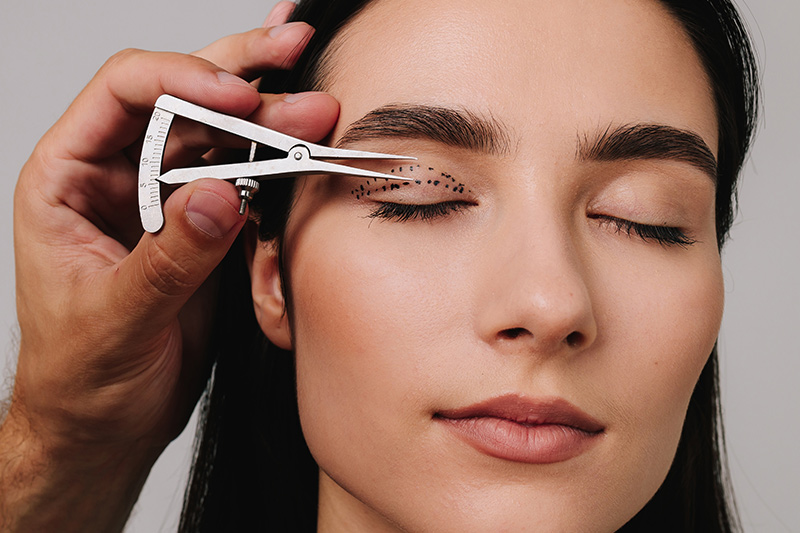
What Factors Influence Your Double Eyelid Surgery Plan?
Choosing a double eyelid surgery approach involves bringing the surgical method and crease design together. Your plastic surgeon will assess several factors to determine which combination may be appropriate.
Amount of Eyelid Skin and Fat
The amount and distribution of skin and fat can influence which surgical technique is suitable. Patients with little excess tissue may be candidates for a suture or minimal incision technique, while those who require skin or fat removal may need an incisional approach.
Natural Eyelid and Epicanthal Fold Anatomy
Your existing eyelid structure affects how a new crease can be positioned and formed. The presence and shape of the epicanthal fold at the inner corner of the eye may also influence whether a tapered or parallel crease is appropriate.
Preferred Crease Shape and Height
The appearance you would like to achieve is another consideration. Tapered and parallel folds create different crease shapes, while the height of the fold affects how prominent it appears. Rather than considering these features in isolation, the crease should be planned in relation to your natural eyelid structure and overall facial proportions.
Recovery and Crease Longevity
The techniques also differ in their recovery and how the crease is maintained over time. The suture method generally involves a shorter recovery but has a greater possibility of the crease weakening or fading. Incisional techniques involve a longer recovery but generally create a more stable crease. A minimal incision technique may offer another option for suitable patients who require some tissue adjustment without a full-length incision.
Choosing Your Double Eyelid Surgery Approach With Dr Andrew Tay
There is no single double eyelid surgery technique or fold style that suits everyone.The right approach depends on your eyelid anatomy, preferred crease and recovery expectations. It is also important to consider how the chosen fold shape and height will complement your natural features, rather than selecting a technique or style based on appearance alone.
At The Plastic Surgery Practice, consultations are conducted by Dr Andrew George Tay, a consultant plastic surgeon with a clinical focus on aesthetic facial procedures , He assesses each patient’s anatomy, concerns and aesthetic goals before discussing which double eyelid surgery technique and fold style may be suitable for them.
If you are considering a double eyelid procedure, book a consultation with Dr Tay to discuss your options, expected outcomes and the approach that may best suit your individual features.
FAQs About Double Eyelid Surgery Options
Meet Our Doctor

Dr Andrew Tay
Consultant Plastic Surgeon
Dr Andrew Tay is an MOH-accredited plastic surgeon in Singapore with over two decades of experience in cosmetic and reconstructive surgery. His expertise spans facial and body cosmetic surgery, with a special interest in facial trauma and skeletal reconstruction. Dr Tay is also a member of the Singapore Association of Plastic Surgeons, the Singapore Society of Cosmetic (Aesthetic) Surgeons, and the International Society of Aesthetic Plastic Surgery.
ideals and lifestyles are different,
these may be non-surgical or surgical procedures.